2026-10-07
How do I choose a natural hairline that suits my face?
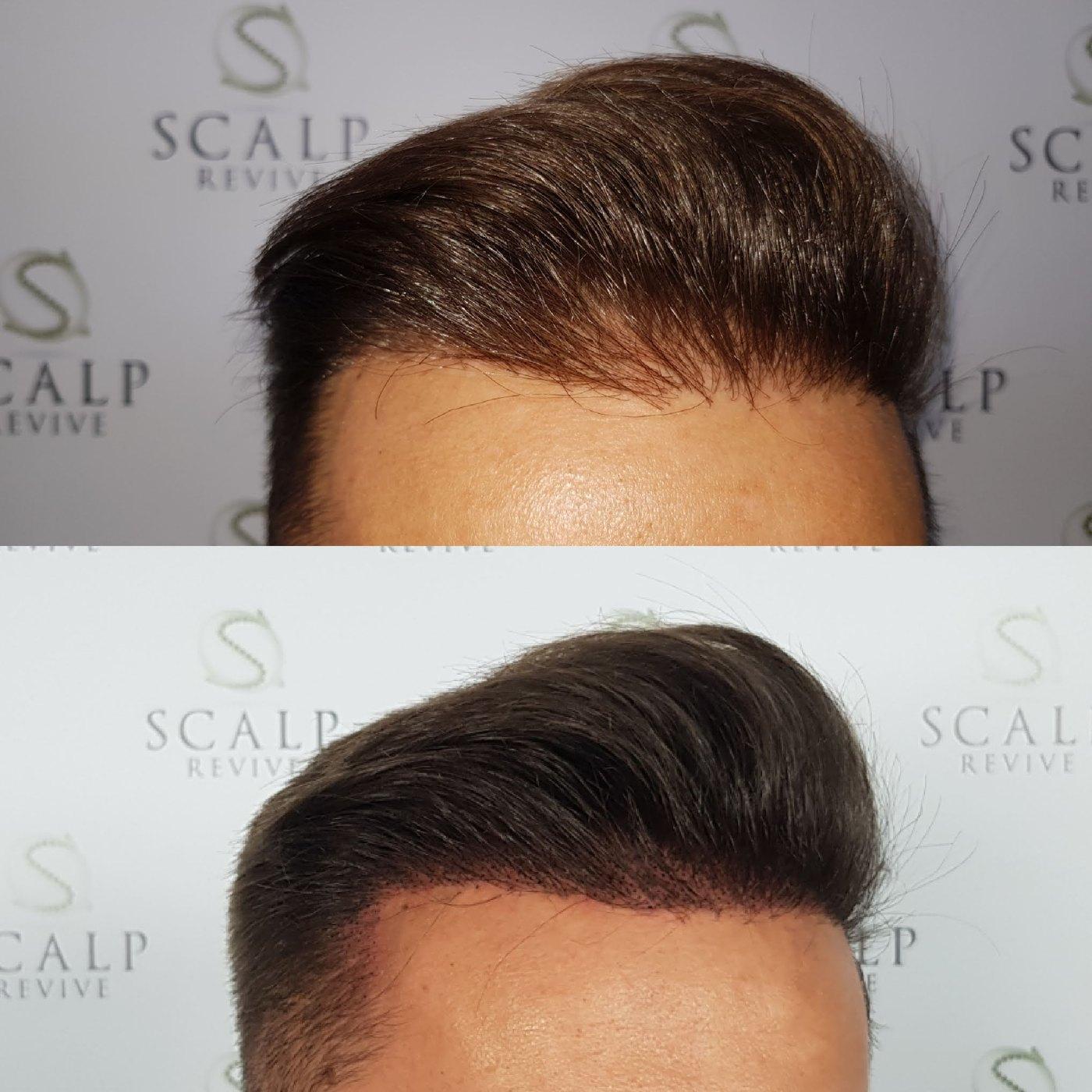
The best hairline is the one that fits your facial structure, age, existing hair and preferred grooming style. Most people seeking the most discreet result suit a soft, irregular hairline. A fuller, straighter edge-up can work for clients who want a sharper barbered appearance, but it must still be designed carefully.
Why does the hairline matter so much?
When I plan scalp micropigmentation, I treat the hairline as the focal point of the design. It is the first area people notice, so an overly straight, low or dark hairline can make the whole result look artificial. This is why I encourage anyone researching a hair tattoo to look closely at a practitioner's healed hairline work, not just fresh photographs taken immediately after treatment.
A good hairline should sit naturally within your face rather than trying to recreate the hairline you had in your teens. Facial proportions, age, hair colour, skin tone, hair loss pattern and the way you normally wear your hair all influence the design. A hairline that looks right on someone else may not suit you at all.
At Scalp Revive, I use my background in barbering and hairline work alongside my training in permanent scalp micropigmentation and tricopigmentation. My role is not simply to draw a line and fill behind it. I need to understand how your features, stubble and remaining hair will work together once you leave the studio.
Which hairline styles can I consider?
A soft hairline
A soft hairline is usually the best starting point for someone who wants the result to be as discreet as possible. Rather than creating a heavy border, I build a graduated transition that appears lighter and less defined at the front. Small variations in the edge help it resemble natural follicle growth instead of a painted outline.
This style can be especially suitable if you want an undetectable finish, are comfortable with a closely shaved look, or want your result to remain believable as your face and grooming preferences change over time. It does not mean the hairline has to be weak or unclear. It means the transition is controlled.
An edge-up hairline
An edge-up is fuller and straighter, giving the appearance of a freshly barbered finish. Some clients prefer this because they want a more defined, deliberate look. It can suit darker skin tones and a sharp grooming style, provided the shape is still balanced with the forehead, temples and overall face.
The important point is that an edge-up should not be copied from a template. I still need to soften or adapt sections where necessary. A strong style can look convincing when it is designed for the individual, but it can look noticeably artificial if it is placed too low, made too symmetrical or given the same density from one side to the other.

How should my face and hair loss pattern influence the design?
I assess the natural landmarks around your forehead and temples before agreeing the shape. A mature hairline usually needs a little more restraint than a youthful, low hairline. If the front is completely bald, I also consider where a believable hairline would sit with your facial structure and age, rather than simply placing pigment where the old hairline used to be.
Your pattern of hair loss matters too. Recession, diffuse thinning, a widow's peak, crown loss and complete baldness each call for a different balance. The hairline should connect naturally with the areas behind it. If the front is soft but the rest of the scalp is very dense, or if the temples are shaped differently on each side without a reason, the result can lose its realism.
Colour is matched to your current hair follicle colour. I also consider how your natural hair appears in different light, because pigment that looks appropriate in the studio must still blend with your normal grooming routine. SMP creates a visual impression of hair. It does not grow hair or change the way existing follicles develop, so realistic expectations are part of the design discussion.
What grooming style should I plan for?
Your preferred hair length should be agreed before treatment. If you still have hair around the treated area, fine stubble maintained with clippers or a trimmer every few days can help the natural hair and pigment sit together. If the hair loss is more advanced, a fully shaved finish using a razor, rotary shaver or foil shaver may provide the most consistent blend.
This is one reason I ask how you expect to maintain the result. A hairline that looks right with very short stubble may not suit a longer style, and an edge-up needs regular grooming if you want to keep that freshly barbered appearance. Bring photographs of the styles you genuinely wear, rather than only examples you like online.
If you are considering treatment between existing hair, the objective is different from creating a fully shaved look. Pigment can reduce the contrast between scalp and hair, but it should not be used to create an unrealistically solid scalp. Some visible scalp is a normal part of a credible result.
What should happen during the consultation?
Your consultation is where we discuss the hairline rather than rushing straight into treatment. I will ask about your hair loss, medical history, allergies, skin condition, grooming habits and expectations. Please disclose allergies and mention any history of keloid scarring, eczema, psoriasis or active scalp irritation. These issues may need further assessment before proceeding.
We agree the shape before pigment is applied. I also talk through your plans and which approach may suit you. Permanence, maintenance and the finish you want should be considered together.
Before an appointment, wash your hair and scalp. Avoid topical hair products during the week beforehand and avoid alcohol the day before and after treatment. I will discuss the preparation that applies to you and explain what to expect from the treatment process.
After treatment, general good-practice guidance includes keeping the scalp dry and avoiding washing, sweating, strenuous exercise, hot showers, steam rooms and direct sun exposure for the period advised. Do not pick at any flaking or scabs. After the initial period, follow the aftercare instructions given for your skin and treatment, including long-term scalp protection with sunscreen.
How can I judge whether a hairline is right for me?
Look for healed examples, not only immediately finished work. Fresh pigment can appear stronger than the settled result, while healing may include temporary darkening, lightening and flaking. Ask how the practitioner chooses hairlines for different faces, how they match pigment, and what happens if your preferences change later.
You can view the Scalp Revive results gallery to see examples of the artist's work, but remember that photographs cannot tell you exactly how a design will suit your scalp. I assess that in person during a free consultation.
You can also read about the scalp micropigmentation treatment, including what the procedure is designed to achieve and what it cannot do. The most useful hair tattoo ideas are those that help you describe your preferred finish, and the scalp micropigmentation hairline I design is always individual to you.
If you would like to discuss the right hairline for your face and grooming routine, you can book a free consultation with me.
Frequently asked questions
Can I choose a hairline from a photograph?
You can bring photographs to show the type of finish you like, such as soft, rounded or sharply barbered. I would not copy another person's hairline exactly, because facial proportions, hair loss pattern, skin tone and natural hair colour differ. The reference helps guide our conversation, while the final design is individual.
Should my SMP hairline be symmetrical?
It should look balanced, but perfect mathematical symmetry is not always natural. Most faces and natural hairlines have small differences between the two sides. I consider your facial structure and existing hair before making adjustments, so the result appears believable rather than rigidly mirrored.
Can I change my hairline style later?
Small changes may be possible during future work, but pigment remains in the skin as it gradually fades, so major changes should not be assumed. A shape that is too low or too bold can be difficult to alter without removal. It is better to choose a conservative design after a thorough consultation.
Will a soft hairline look too faint?
A soft hairline should still provide definition. Its purpose is to create a gradual transition, with less visual weight at the front than a solid edge. The density and shade can be built behind that transition so the overall result suits your grooming style without making the first line look stamped on.
Can scalp micropigmentation hide a widow's peak?
It can be incorporated into the design, softened or balanced with the surrounding hairline, depending on your preferences and pattern of loss. A widow's peak is not automatically something that needs removing. I would assess its shape, your temples and your usual haircut before suggesting whether to retain or modify it.
What if I am unsure whether permanent SMP is right for me?
That uncertainty is worth discussing before treatment. Tricopigmentation is a different, more temporary approach, so permanence and maintenance can be compared during consultation. I can explain the visual aims, likely grooming requirements and relevant aftercare before you decide.
Does a hair tattoo work with grey or lighter hair?
The pigment is selected to relate to your current follicle colour and the contrast between your scalp and remaining hair. Grey, blonde, brown and black hair each need a considered approach. The aim is not to make every follicle look identical, but to create a coherent shadow that works with your natural hair.
How long should I wait before judging my hairline?
Do not judge the final colour immediately after treatment. The scalp can look darker at first, then soften as the area heals. Healing and settling vary between people, so follow the aftercare guidance you are given before deciding whether the shade or density needs adjustment.