
SMP FOR LONG HAIR
Scalp micropigmentation for long hair, also called density or thinning-hair treatment, uses the same microdot technique as standard SMP but is designed to blend with hair that hasn't been shaved: reducing the contrast between scalp and hair rather than mimicking a fully shaved look. It suits clients with diffuse thinning, a widening parting, or a receding hairline who want to keep their hair longer while still disguising the scalp showing through. At Scalp Revive in Leeds, this treatment is carried out by Shane Anderson, one of only ten dual SMP and tricopigmentation specialists in the world.
see our results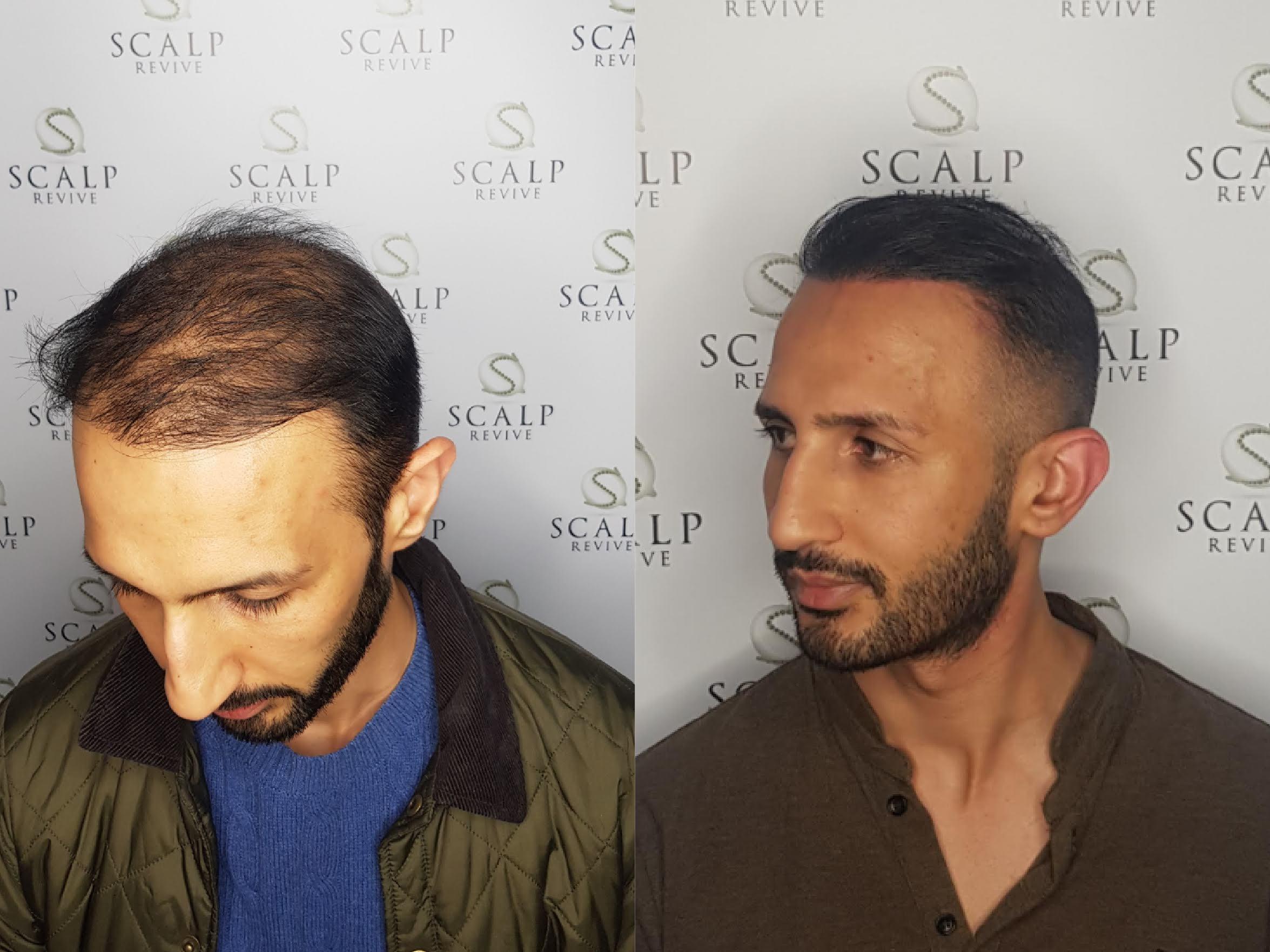
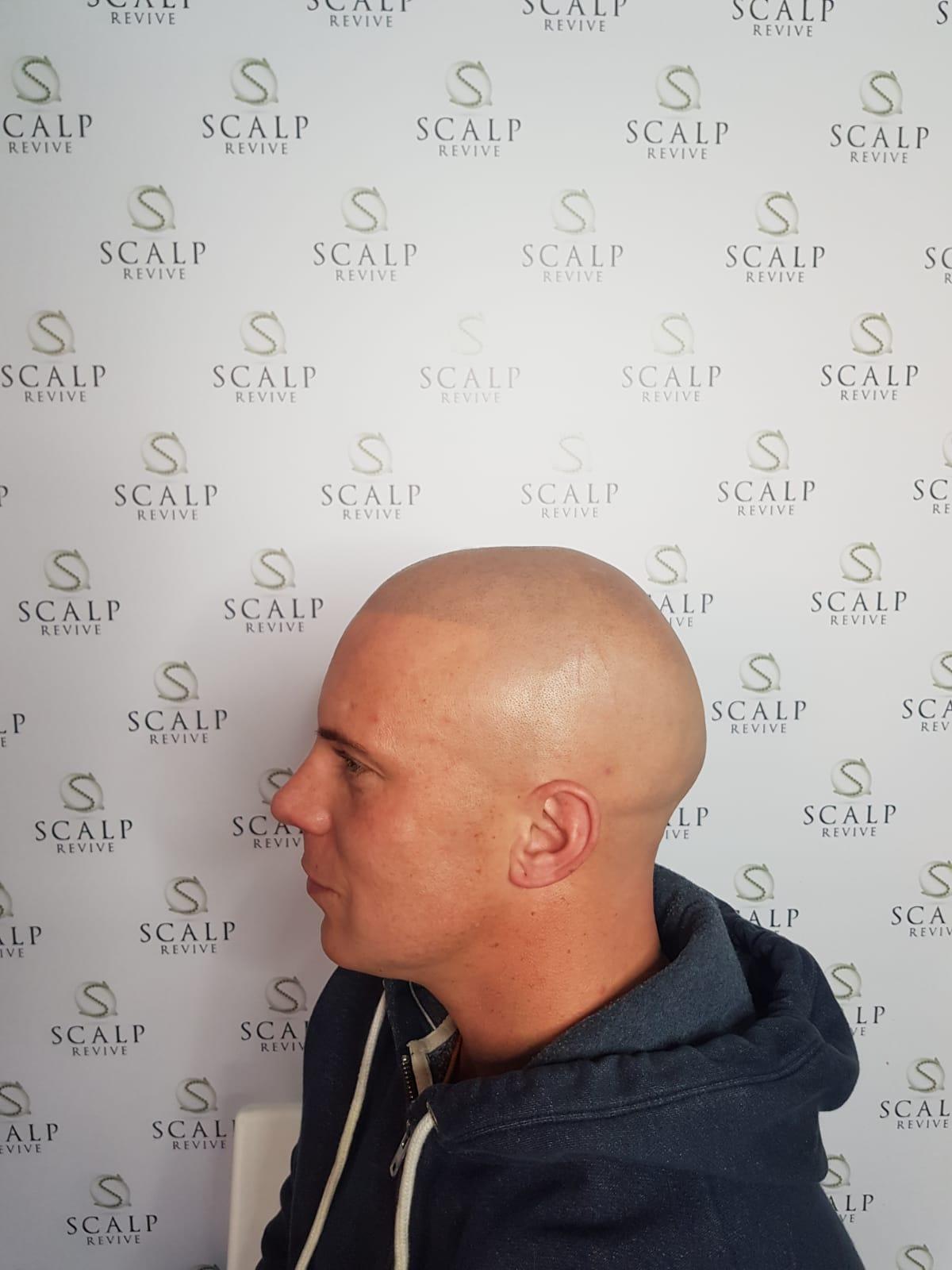
What to expect
Not all Scalp Revive clients want to shave their hair. We recognise this and provide highly advanced scalp micropigmentation and scalp tricopigmentation treatments for clients who want to maintain a longer hair length.
Many people initially associate scalp micropigmentation treatments with male balding patterns, for use in short hair to mask the appearance of a balding scalp. On the contrary, many women experience thinning and balding hair; our scalp micropigmentation (SMP) long hair treatment and SMP for thinning hair is an excellent treatment option for such an occurrence. This scalp micropigmentation for long hair can help you combat the aesthetical impacts of hair loss.
Unlike standard procedures where the purpose is to mimic the appearance of shaved hair, our longer hair treatments reduce the contrast between the skin and remaining hair to produce a highly effective camouflage, and the illusion of greater fullness and density. If you continue to lose more hair as you age, the pigmentation is already in place, so you’re already covered.
Density fill treatments are suitable for clients that have sufficient hair remaining. Please contact our Leeds clinic for advice if you’re unsure what options are available to you; our team are highly trained and consequently equipped to answer a range of queries, such as thinning hair treatment for women Leeds local.
Because the goal is added density rather than a shaved-head effect, the technique and pigment placement used for long hair and thinning hair treatments differ from standard scalp micropigmentation, and the right approach depends on how much natural hair you still have and how it's distributed across the scalp. That's assessed during a free consultation at our Leeds clinic, where we can talk through realistic expectations for your particular pattern of thinning before any treatment begins. This approach works well alongside future hair loss too, since the pigmentation already in place continues to provide coverage even if the surrounding natural hair continues to thin.
Aftercare
What to expect while it heals
Day 1
Keep it untouched
Don't wash, touch, or apply anything to the scalp. Some redness and warmth is normal: the pigment will look darker than the final result.
Days 1 to 4
Stay completely dry
No washing, no sweating, no gym. Avoid anything that makes the scalp hot or damp.
Days 4 to 7
Start gentle rinsing
Rinse with lukewarm water and fingertips only: no cloths, no pressure. Introduce a fragrance-free cleanser from around day 7.
Days 5 to 12
Expect flaking
Light scabbing and flaking is normal as the surface layer sheds. Don't pick at it: the real pigment sits deeper and isn't affected.
Days 10 to 14
Resume normal routine
Light exercise, normal washing, and shaving with a foil shaver can all resume. Razor blades are fine from around day 14.
Weeks 2 to 4
Full healing
Colour settles and evens out over the following weeks. Avoid direct sun, pools and saunas until around day 28 to 30.
Common questions
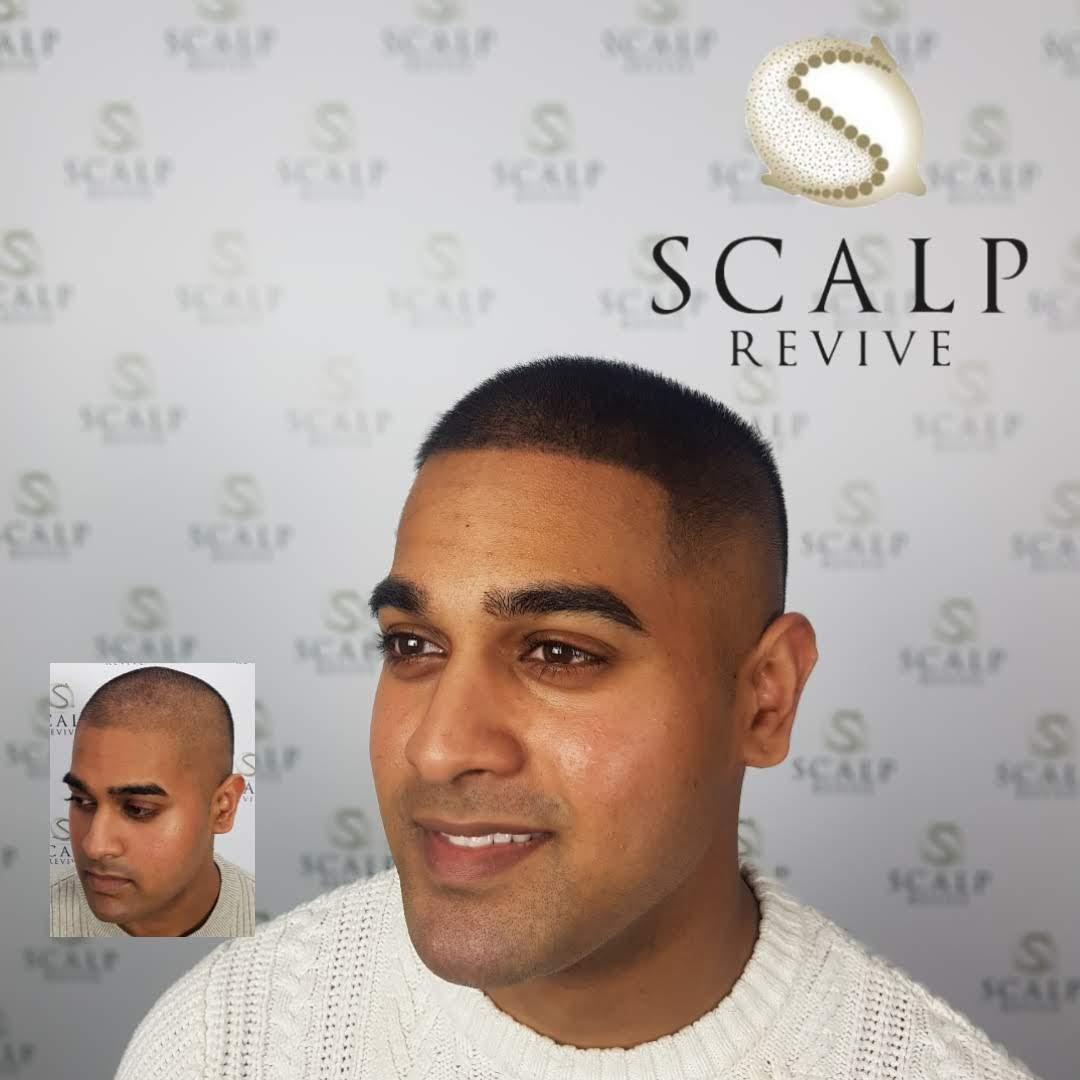
Standard scalp micropigmentation is usually associated with a shaved or very short head, where the pigment mimics the look of closely cropped hair follicles across the whole scalp. SMP for longer hair is built around a different goal: rather than recreating a shaved look, it reduces the contrast between the skin and the hair you still have, so thinning areas blend in with the surrounding hair instead of standing out as pale or bare patches. The result is an illusion of greater fullness and density through your existing length, rather than a uniform shaved appearance. It is offered using either the permanent scalp micropigmentation technique or tricopigmentation, the same two treatments used elsewhere at Scalp Revive, so the choice between a longer lasting or trial-first result still applies. This makes it a genuinely different approach, even though the underlying technique of depositing pigment into the skin is the same.
Density fill treatments for longer hair are suitable for clients who have sufficient hair remaining, since the technique works by reducing the contrast between skin and existing hair rather than covering a fully bare scalp. If you still have reasonable coverage but are noticing thinning, a widening parting or areas where the scalp is becoming more visible through your hair, this treatment is designed specifically for that situation rather than for someone with little or no hair left in the area. It suits people who do not want to shave their head and would rather keep their current hair length while addressing the visual impact of thinning. If you are not sure whether you have enough remaining hair for this approach to work well, that is exactly the kind of question the Leeds clinic can answer for you, since the team is used to advising on what is realistic for a given amount of remaining coverage.
Yes. Scalp micropigmentation is often initially associated with male pattern baldness and short hair, but many women experience thinning and balding hair too, and the longer hair treatment was developed with exactly that in mind as well as for men who do not want to shave. Because the technique works by blending pigment with your existing hair rather than mimicking a fully shaved look, it suits the way female hair thinning typically presents, which is more often gradual thinning and widening partings than complete baldness in one area. The clinic also offers dedicated treatments for women covering conditions like traction alopecia, alopecia areata and telogen effluvium, so if your thinning is linked to one of those causes there is a wider conversation to be had about which approach fits your specific pattern of hair loss.
- Traction alopecia
- Alopecia areata
- Telogen effluvium
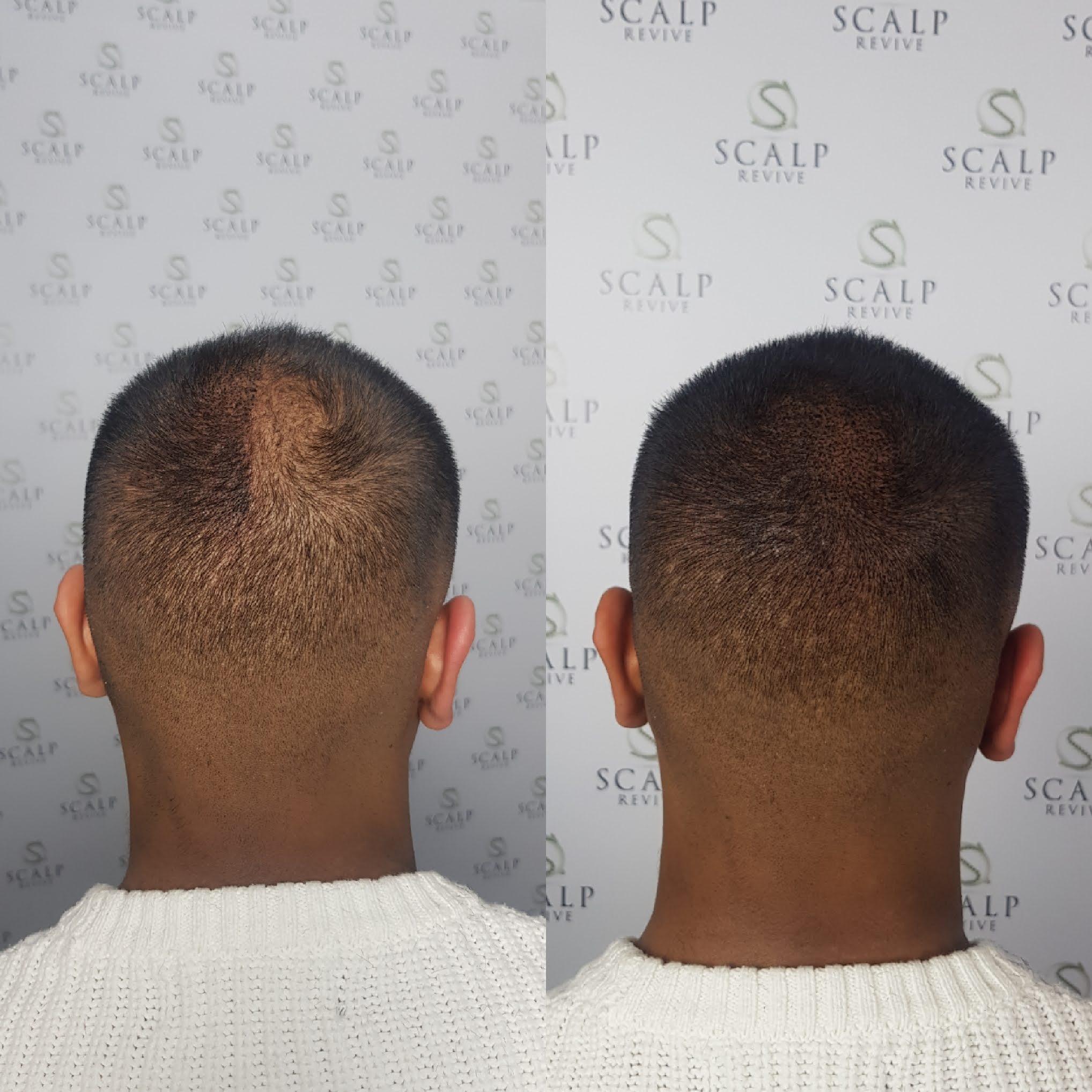
Rather than mimicking the appearance of a shaved head, the longer hair treatment works by reducing the visual contrast between your skin tone and the hair you still have. Thinning typically shows up because more scalp becomes visible through the hair, creating a patchy or see-through effect, and this treatment addresses that directly by adding pigment beneath and around the existing hair so the scalp reads as darker and less exposed. The overall effect is that your hair appears fuller and denser without changing its length or requiring you to cut it shorter. Because the pigment is worked in around your natural hair pattern rather than applied as a uniform block, the result is designed to look like a natural reduction in visible scalp rather than an obviously artificial addition, which is part of what makes it effective for clients who do not want a shaved or heavily altered look.
One of the practical advantages of having density fill pigmentation applied while you still have reasonable hair coverage is that the pigment is already in place if you continue to lose hair as you get older. Rather than waiting until hair loss has progressed further and then trying to address a larger area, having the treatment earlier means the groundwork for camouflage is already established, so any further thinning has less visual impact than it otherwise would. This does not mean the treatment prevents further hair loss, since it is a cosmetic pigmentation technique rather than a medical treatment for the underlying cause, but it does mean you are not starting from nothing if your hair pattern changes over time. If your hair loss does progress significantly, that is something to discuss with the clinic, since further pigmentation may become appropriate.
Both the permanent scalp micropigmentation technique and tricopigmentation can be used for the longer hair, density fill approach, and the choice between them comes down to the same considerations that apply to the shaved-head versions of the treatment. Permanent SMP is designed to last three to five years before a top up is needed, which suits clients who are confident this is the right long term look for their thinning hair. Tricopigmentation uses a different ink that fades naturally, typically within twelve to twenty four months, making it a way to trial the density fill effect before committing to something longer lasting, with an annual top up needed if you decide to continue. Because the longer hair application still needs to blend precisely with your remaining hair, this is a decision worth making with the clinic's input rather than in isolation.
- Permanent SMP: designed to last 3 to 5 years before a top up
- Tricopigmentation: fades naturally, typically within 12 to 24 months, with an annual top up if you continue
Yes, scalp micropigmentation and tricopigmentation can both be used to camouflage scarring from FUE and FUT hair transplant procedures, and the same principle extends to the longer hair, density fill approach. If you have had a transplant but still have visible thinning, uneven density or scarring around the treated area, and you do not want to shave your head to address it, the density fill technique can be used to blend pigment with your existing hair rather than creating a shaved-head appearance over the scarred area. This means having had a transplant does not rule out this treatment, and in some cases the two can work well together, with the transplant providing living hair and the pigmentation adding density and disguising any remaining scarring or unevenness. The right approach depends on your specific scalp and hair pattern, which is best assessed directly by the team.
Because this treatment works with your existing hair rather than replacing the appearance of hair entirely, the artist needs to plan the pigment placement around your natural hair colour, density and growth pattern rather than applying a standard template. This means looking closely at where your hair is thinning most, how much natural coverage remains in different areas, and matching the pigment tone closely enough to your hair colour and skin that the transition between pigmented and untouched areas is not visible. This is a more nuanced process than the shaved-head version of scalp micropigmentation, since there is no uniform surface to work across, and it is one of the reasons the clinic's highly trained team is equipped to answer detailed questions about what is realistic for your particular hair before any treatment begins.
Shane, the clinic's lead artist, is trained in both tricopigmentation and permanent scalp micropigmentation and is described as one of only ten specialists in the world trained across both disciplines, which is particularly relevant for the longer hair treatment since it can be delivered using either technique depending on what suits the client. His background before specialising in pigmentation was in barbering, working with clients from all ethnicities, which is directly useful for a treatment that has to blend closely with a client's existing hair colour, texture and growth pattern rather than working against a blank, shaved canvas. That combination of barbering grounding and dual specialist pigmentation training is why the Leeds clinic is comfortable advising on what is realistic for density fill work, including for clients who are unsure whether they have enough remaining hair for the treatment to be effective.
The best starting point is a free, no obligation consultation with the Leeds clinic, where the team can look at how much hair you currently have, how it is thinning, and advise honestly on whether the longer hair density fill approach is realistic for your particular pattern of hair loss. Because this treatment depends on having sufficient remaining hair to blend with, this is one of the questions the team is specifically equipped to answer, including for local queries about thinning hair treatment options for women in Leeds. You will be given an individual quote once your hair and goals have actually been assessed, rather than a generic price quoted in advance. You can get in touch through the contact form on this site or by messaging the clinic directly, with no obligation to proceed simply for asking whether this treatment suits your situation.
Message Shane
Get a free consultation today by simply filling in the form below! For a rapid response, call or whats app us. We aim to restore your confidence with our permanent and semi-permanent treatments.