
scalp micropigmentation for women
Scalp micropigmentation for women uses the same microdot pigmentation technique as standard SMP, adapted to suit patterns of female hair loss such as diffuse thinning, a widening centre parting, or alopecia, rather than the fully shaved-head look often associated with male treatments. It's a non-surgical way to camouflage areas of visible scalp and restore the appearance of natural density. At Scalp Revive in Leeds, treatment is carried out by Shane Anderson, one of only ten dual SMP and tricopigmentation specialists in the world.
see our results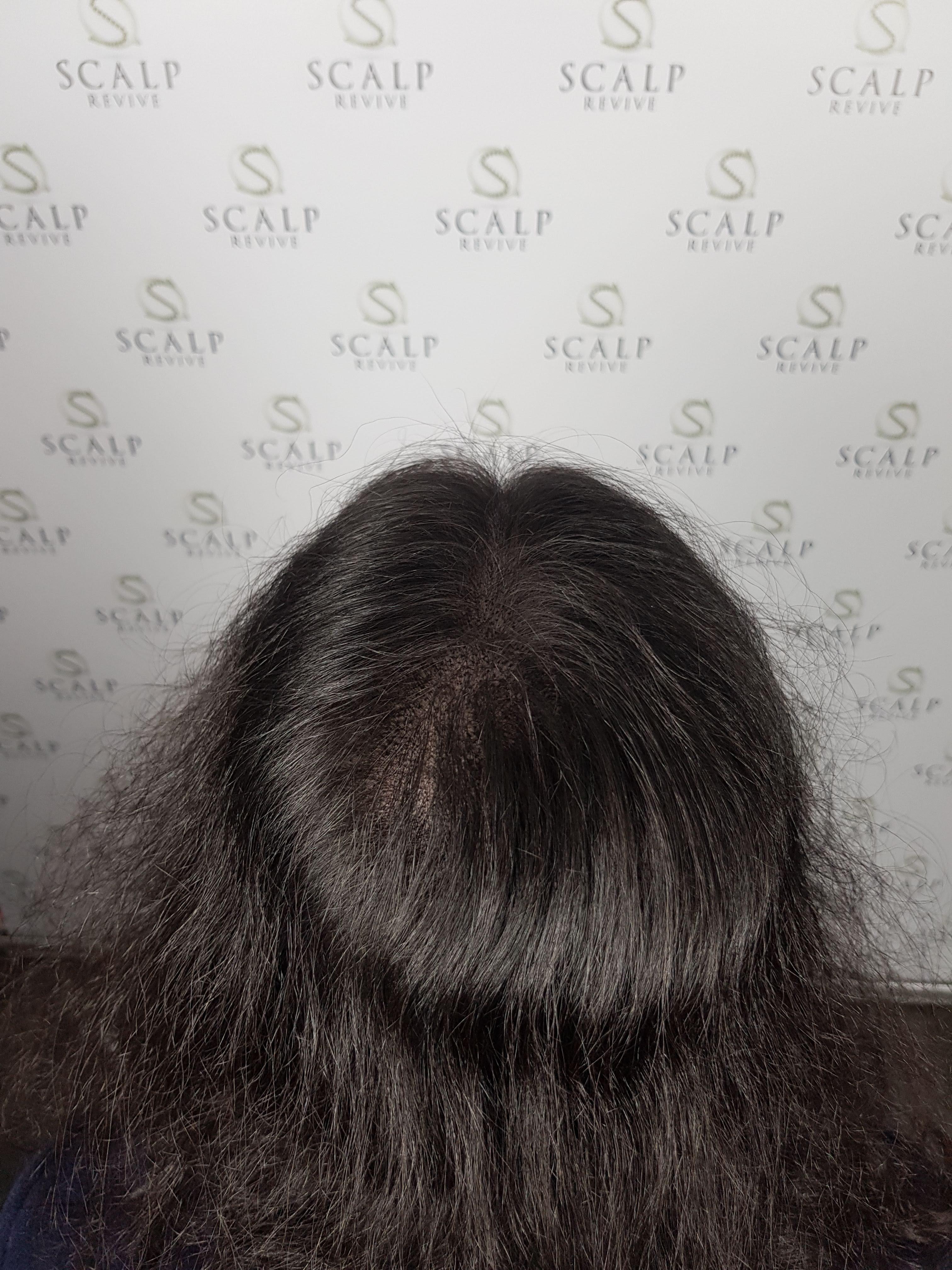
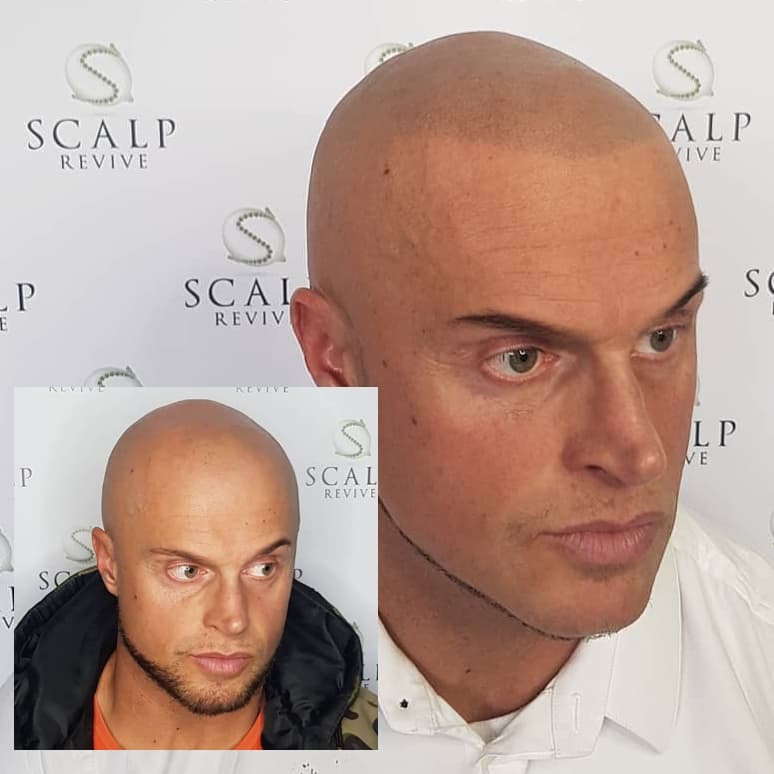
What to expect
Female clients experiencing thinning hair are increasingly seeing the benefits offered by our treatment options. We offer a range of scalp micropigmentation solutions for women including permanent SMP and shorter duration tricopigmentation treatments.
Scalp micropigmentation for women works on a similar premise and is based on a comparable technique to our longer hair treatments . Our solutions provide the illusion of greater density and fullness, camouflaging areas of thinning hair in a discreet way that looks totally natural.
We offer treatments for women suffering with all kinds of hair loss from traction alopecia, alopecia areata and telogen effluvium. Click here to request a free consultation.
Hair loss in women can have a range of causes, including traction alopecia caused by tight hairstyles, alopecia areata, and telogen effluvium, a temporary shedding often linked to stress, illness or hormonal change. Each of these affects the scalp differently, from small patches of missing hair to an overall thinning across the whole head, so the right micropigmentation approach depends on your particular pattern of loss rather than a single fixed technique.
Because hairlines and hair patterns vary so much more visibly on women than on men, the shape, density and pigment tone used are tailored during a free consultation at our Leeds clinic, where your existing hair is taken into account so the finished result blends in rather than standing out. Both permanent SMP and semi-permanent tricopigmentation are available, giving you the choice between a longer-lasting result or the option to see how you feel about the look before committing further.
Scalp micropigmentation for women has become more widely recognised in recent years as awareness of female pattern hair loss has grown, and it's now offered alongside treatments originally developed for men, adapted specifically for finer or longer hair and less predictable patterns of thinning. It can also be used to add the appearance of density around an existing parting, soften a receding hairline, or camouflage scarring, without requiring surgery or ongoing maintenance beyond the usual top-up schedule for the treatment type chosen.
Aftercare
What to expect while it heals
Day 1
Keep it untouched
Don't wash, touch, or apply anything to the scalp. Some redness and warmth is normal: the pigment will look darker than the final result.
Days 1 to 4
Stay completely dry
No washing, no sweating, no gym. Avoid anything that makes the scalp hot or damp.
Days 4 to 7
Start gentle rinsing
Rinse with lukewarm water and fingertips only: no cloths, no pressure. Introduce a fragrance-free cleanser from around day 7.
Days 5 to 12
Expect flaking
Light scabbing and flaking is normal as the surface layer sheds. Don't pick at it: the real pigment sits deeper and isn't affected.
Days 10 to 14
Resume normal routine
Light exercise, normal washing, and shaving with a foil shaver can all resume. Razor blades are fine from around day 14.
Weeks 2 to 4
Full healing
Colour settles and evens out over the following weeks. Avoid direct sun, pools and saunas until around day 28 to 30.
Common questions
Women can experience thinning or balding hair for a number of different reasons, and Scalp Revive offers treatments for several of the more common causes, including traction alopecia, alopecia areata and telogen effluvium. Because these conditions can look quite different from one another, from gradual thinning across the crown to more localised patches of hair loss, the approach to pigmentation needs to be tailored to how your particular hair loss is presenting rather than applied as a single fixed pattern. Scalp micropigmentation for women generally works on the same premise as the longer hair, density fill treatment, aiming to camouflage thinning discreetly rather than mimic a shaved look, which suits how female hair loss usually presents. If your hair loss has a cause not covered here, that is worth raising at a consultation so the team can advise honestly on whether pigmentation is likely to help.
- Traction alopecia
- Alopecia areata
- Telogen effluvium
Both options are available for female clients, and the difference comes down to how long the result is designed to last. Permanent scalp micropigmentation uses ink intended to remain in the skin for years, typically three to five years before a top up is needed, making it suited to clients who are confident this is the right long term solution for their thinning hair. Tricopigmentation uses a different ink that the body gradually flushes out, so results usually fade completely within twelve to twenty four months, and continuing clients typically need an annual top up over one to two sessions. This makes tricopigmentation a lower commitment way to trial the look and see how the results suit you and your lifestyle before deciding whether to move to the permanent treatment, which can be reassuring if you have not had this type of treatment before and want to see it on yourself first.
- Permanent SMP: designed to last 3 to 5 years before a top up
- Tricopigmentation: fades naturally within 12 to 24 months, with an annual top up if you continue
The aim of scalp micropigmentation for women is specifically to look natural and discreet rather than to create an obvious or artificial looking result. Rather than mimicking a fully shaved head, which is rarely the goal for female clients, the treatment works on the same premise as the longer hair density fill approach, reducing the contrast between the skin and your remaining hair so thinning areas blend in rather than stand out. This means the pigment is worked in around your existing hair colour, density and growth pattern, so the visible change is a fuller, denser looking head of hair rather than a pattern that reads as pigmentation on close inspection. Because the natural, discreet look depends heavily on matching the pigment to your individual hair and skin tone, this is one of the main things assessed and planned for at a consultation before any treatment goes ahead.
No, and this is one of the more common misconceptions about the treatment. Scalp micropigmentation is often initially associated with short or shaved hair because that is how it is most commonly used for male pattern baldness, but for women it typically works on a different premise, similar to the longer hair density fill treatment. Rather than mimicking a shaved look, it reduces the contrast between the skin and the hair you still have, so it is designed to work alongside your existing hair length rather than requiring you to cut or shave it. This makes it a realistic option for the way female hair thinning usually presents, which is more commonly gradual thinning or a widening parting than complete baldness in a defined area, and it is one of the reasons the treatment is offered with women's hair loss patterns in mind.
Yes, these are among the conditions Scalp Revive treats directly, alongside telogen effluvium. Because alopecia areata often causes more defined patches of hair loss while traction alopecia typically affects areas under repeated tension, such as around the hairline from certain hairstyles, the approach to pigmentation needs to reflect the specific pattern each condition tends to produce rather than treating all hair loss the same way. In both cases the underlying technique is the same, depositing pigment into the skin to add the appearance of density or definition where hair has been lost, but the planning around your particular pattern of loss is what determines how natural and effective the result looks. If you have been diagnosed with either condition, or suspect you have one of them, bringing that information to your consultation helps the team plan a more accurate, tailored approach.
How long results last depends on whether you choose permanent scalp micropigmentation or tricopigmentation. The permanent option is designed to hold its appearance for three to five years before a top up is needed to refresh density and colour, while tricopigmentation fades gradually and is usually gone within twelve to twenty four months, with an annual top up typically needed over one to two sessions if you decide to continue with it rather than switch to the permanent treatment. Many women choose to start with tricopigmentation specifically because it allows you to see how the result looks and suits your lifestyle before committing to something longer lasting, then move to the permanent option once they are confident it is the right choice. Either way, a top up is a smaller piece of work than the original treatment.
A consultation is free and comes with no obligation to book any treatment afterwards. During it, the team looks at your specific pattern of thinning or hair loss, discusses what is realistic for your hair and goals, and talks through whether permanent scalp micropigmentation or tricopigmentation is the more suitable starting point for you. Because women's hair loss can stem from a range of causes, including traction alopecia, alopecia areata and telogen effluvium, this is also the point where you can discuss what is causing your hair loss if you know it, so the treatment plan reflects your actual situation rather than a generic approach. You will be given an individual quote once your hair and goals have been properly assessed, rather than a price given before anyone has looked at your scalp, and there is no pressure to commit simply for coming in to ask questions.
Yes, the treatment is planned around your individual hair colour, texture and skin tone rather than applied as a single standard look, and this matters even more for women's treatments given the aim is a natural, discreet result rather than an obviously altered appearance. Shane, the clinic's lead artist, is trained in both permanent scalp micropigmentation and tricopigmentation and has a background in barbering working with clients from all ethnicities, which feeds directly into how pigment tone and pattern are chosen so the result blends convincingly with your own hair and skin. Because the natural look depends so heavily on this matching process, it is one of the things properly assessed at a consultation rather than assumed in advance, so if you are unsure how your specific hair and skin tone would be handled, that is a fair question to bring with you.
Shane, the clinic's lead artist, is trained in both tricopigmentation and permanent scalp micropigmentation and is described as one of only ten specialists in the world trained across both disciplines, which is relevant to women's treatments since clients often need advice on which of the two approaches suits their particular pattern of hair loss. His background before moving into pigmentation was in barbering, working with clients from all ethnicities, which gave him a strong grounding in hair growth patterns, hairlines and how hair sits differently across different hair types before he specialised in scalp pigmentation. That combination of barbering experience and dual specialist training is particularly useful for women's treatments, which rely on subtle blending with existing hair rather than the more uniform approach used for a fully shaved head, and it is a key reason clients in Leeds choose Scalp Revive for this type of work.
You can book a free, no obligation consultation through the contact form on this site or by messaging the Leeds clinic directly. At the consultation, the team will look at your specific hair loss pattern, whether that is thinning, traction alopecia, alopecia areata, telogen effluvium or something else, and talk through which treatment option, permanent scalp micropigmentation or tricopigmentation, is likely to suit your goals and how much hair you currently have. You will receive an individual quote once your situation has actually been assessed, rather than a generic price quoted without anyone having looked at your hair. There is no obligation to proceed with treatment simply for coming in to ask questions, so if you are still deciding whether scalp micropigmentation is right for you, a consultation is a low pressure way to get clear, honest answers before making any decision.
Message Shane
Get a free consultation today by simply filling in the form below! For a rapid response, call or whats app us. We aim to restore your confidence with our permanent and semi-permanent treatments.