2026-10-23
How natural will my SMP look to people close to me?
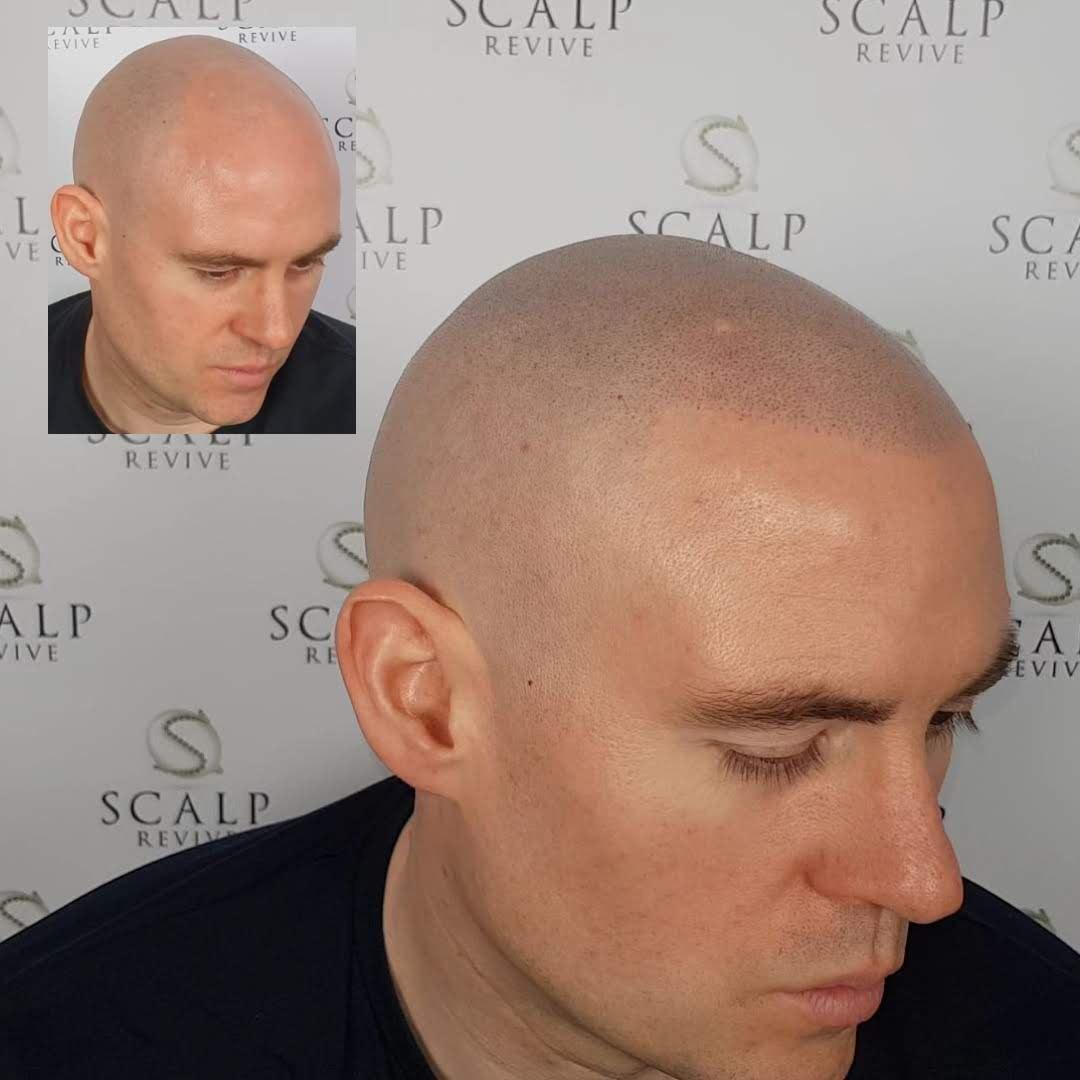
Usually, well-executed SMP looks like natural follicle shadow rather than obvious tattooing, though a very close look can reveal that the dots are pigment. It is not meant to create a solid painted scalp. The result depends on dot size, pigment colour, placement, density, hairline design, your skin and how the treatment heals.
What should scalp micropigmentation look like up close?
When I discuss SMP with a client, I explain that the closest comparison is the look of closely clipped hair follicles, not a painted or powdered scalp. Tiny impressions of pigment reduce the contrast between your scalp and hair. They do not create real hair or change natural growth.
Some scalp showing through is important. A completely dense, uniform result can look artificial because real hair coverage is not perfectly even. I aim to build density gradually and keep the pattern consistent with your natural hair, rather than covering every part of the scalp with the same strength of pigment.
Up close, you may be able to see that the impressions are cosmetic pigment. That is different from people being able to identify the treatment from a normal conversational distance. A natural result should sit quietly with your existing hair and suit the way you wear it.
SMP is also not designed to look identical in every situation. Strong overhead lighting, a wet scalp, a very close photograph or magnification can reveal more detail than ordinary social viewing. That does not necessarily mean the treatment looks fake in everyday life.
What makes SMP look natural rather than fake?
The hairline is one of the most important parts. A harsh, straight or overly low hairline can make otherwise careful work look conspicuous. I assess your facial structure, age, existing hair pattern and likely future hair loss before discussing the shape. For the most undetectable result, many clients suit a softer hairline with a gradual transition.
Dot size and spacing matter too. The front edge needs a finer, more irregular transition than the denser areas behind it. Pigment must be placed at an appropriate depth. Too shallow and it can fade quickly. Too deep and it may spread, blur or lose the crisp follicle effect.
Colour is matched to your current hair follicle colour, not simply chosen as the darkest possible shade. The pigment can appear cooler as it settles beneath the skin, so I plan for the healed appearance rather than judging only what you see immediately after application. This is relevant whether your hair is black, brown, blonde, white or grey.
Your haircut also affects the result. Fine stubble can blend with follicle impressions when you have hair remaining in the treated area. With more advanced hair loss, a fully shaved or closely clipped style may create the most consistent appearance. Density SMP can also be placed between existing hairs, but the design must follow your growth pattern and allow for future changes.

Can you tell SMP is there during the healing process?
Often, the area looks darker or stronger immediately after treatment. Mild redness can also be visible for a short period. The colour then softens as the scalp settles. Lightening during healing is normal, so I ask clients not to judge the final result in the first few days.
SMP is usually planned over more than one appointment, and I confirm the number of sessions at consultation. I start conservatively, then refine shade, density and detail at follow-up appointments. Allowing the skin to settle between sessions helps avoid over-saturation and gives us a better view of how the pigment is behaving.
For general aftercare, keep the treated scalp dry and avoid washing, shaving, sweating, heavy exercise, hot showers and steam rooms for the period I specify. Avoid direct sun while the skin is settling. Do not pick or interfere with any flaking. After healing, long-term SPF and sensible scalp care help protect the colour, which gradually fades over time rather than washing away with shampoo.
Because healing varies between people, I give individual instructions at consultation and after each session. This information is general editorial guidance, not medical advice. If you develop unusual swelling, warmth, severe redness, pus, drainage, fever or severe pain, contact a healthcare provider and let me know about any concern beyond what we discussed.
How can I judge whether an SMP practitioner produces natural results?
Do not rely only on a fresh, close-up photograph. Ask to see healed work, ideally at ordinary viewing distances and across different hair loss patterns and skin tones. Fresh work can look darker and more defined than the settled result.
Pay particular attention to hairline work. Look for a gradual, believable front edge rather than a solid outline. Check whether the dots remain distinct, whether density changes naturally across the scalp and whether the pigment relates to the client's hair colour. A gallery of scalp micropigmentation results can help you understand the type of work an artist presents.
During consultation, ask how the practitioner chooses pigment, how they approach existing hair, what happens if your hair loss progresses and how they manage scar tissue or uneven texture. A responsible consultation should include your medical history, allergies, skin condition, expectations and grooming habits.
You should also check the practitioner's SMP-specific training, licensing and hygiene standards, and see a clean studio. Needles should be packaged and opened in front of you, with appropriate gloves, barriers and device protection. Disclose allergies and mention any history of keloid scarring, active eczema, psoriasis or scalp inflammation. A licensed and experienced provider, careful hygiene and realistic planning reduce avoidable risk, but no cosmetic tattoo is entirely risk-free.
Will people notice my SMP as it ages?
Permanent cosmetic pigment gradually fades as the skin renews, sunlight affects it and the body processes pigment. Skin type, lifestyle, sun exposure, pigment placement and the presence of scar tissue all influence how it changes. Scarring can hold pigment differently from unaffected scalp.
A well-planned result should soften rather than suddenly disappear. You may eventually choose a maintenance appointment, especially if the colour has become lighter or your hairstyle and hair loss pattern have changed. The purpose of a review is not to keep adding darkness automatically. It is to decide whether any refinement is needed while preserving a natural balance.
I work from Scalp Revive in Alwoodley, Leeds, and offer a free consultation. I can assess your scalp, hair pattern and expectations in person before advising whether SMP, including a hair tattoo or density approach, is suitable. You can read more about the scalp micropigmentation treatment before we meet.
If you would like a clearer answer for your own scalp, you are welcome to book a free consultation without pressure.
Frequently asked questions
Can someone feel scalp micropigmentation when they touch my head?
The finished pigment is not raised like an attached hairpiece or surface coating. Once the scalp has healed, the skin should feel like the surrounding area. However, SMP is a tattoo procedure, so temporary tenderness, dryness or sensitivity can occur while the skin settles.
Can SMP look natural with longer hair?
It can, but the haircut needs to suit the amount and pattern of hair loss. SMP between existing hairs can reduce visible scalp show-through, while longer hair may expose differences in density. I assess your usual hairstyle before choosing between a density approach and a closely clipped design.
Can close-up photographs make SMP look less natural?
They can. A close photograph, harsh lighting or a wet scalp can show individual pigment impressions more clearly than normal viewing. When assessing an artist, ask for healed examples at useful distances, not only fresh macro images taken immediately after treatment.
Will SMP match my natural grey or white hair?
The pigment is selected in relation to your current follicle colour and the overall contrast between hair and scalp. With grey or white hair, the design and shade need particular care so the result does not look too dark. Your grooming length also affects how naturally it blends.
Can SMP look uneven if my scalp has scars?
Scar tissue can accept pigment differently from normal skin, particularly when it is raised, indented, newly healed or irregular in texture. SMP may reduce contrast around a suitable scar, but it cannot remove or flatten it. I assess the scar carefully and set expectations before agreeing to treatment.
What happens if I later regret the appearance of SMP?
The safest approach is careful planning before treatment, because correction or removal can be more complicated than an initial application. Pigment gradually fades, and laser removal may be possible, but results and risks depend on the pigment, depth, skin and original work. Discuss concerns promptly rather than adding more pigment.
Can SMP damage my existing hair follicles?
SMP is intended to create a visual effect on the scalp and does not stimulate hair growth or alter natural growth. Careful technique is still important, particularly around existing hair and thinning areas. I plan placement around your growth pattern rather than treating the scalp as a uniform surface.