2026-10-20
Is scalp micropigmentation right if your hair is going grey?

Yes, scalp micropigmentation can be suitable for grey or white hair. I use carefully matched pigment to reduce the contrast between the scalp and remaining hair, rather than trying to make grey hair look dark. The most natural result depends on your hair length, skin tone, hair loss pattern and agreed finish.
How does SMP work with grey or white hair?
When hair turns grey or white, the scalp can become more visible because the hair and skin reflect light differently. This is especially noticeable where there is thinning, a receding hairline or more advanced baldness. SMP does not change the colour or growth of your natural hair. It creates a visual layer of tiny pigment impressions on the scalp, reducing the contrast beneath and between the hairs.
For grey hair, I generally aim for a soft, restrained appearance. The pigment is selected to work with your current follicle colour and overall colouring. I am not trying to recreate a dense black scalp, because that would sit uneasily beside white or silver hair. The goal is a believable shadow or stubble effect that supports the hair you have.
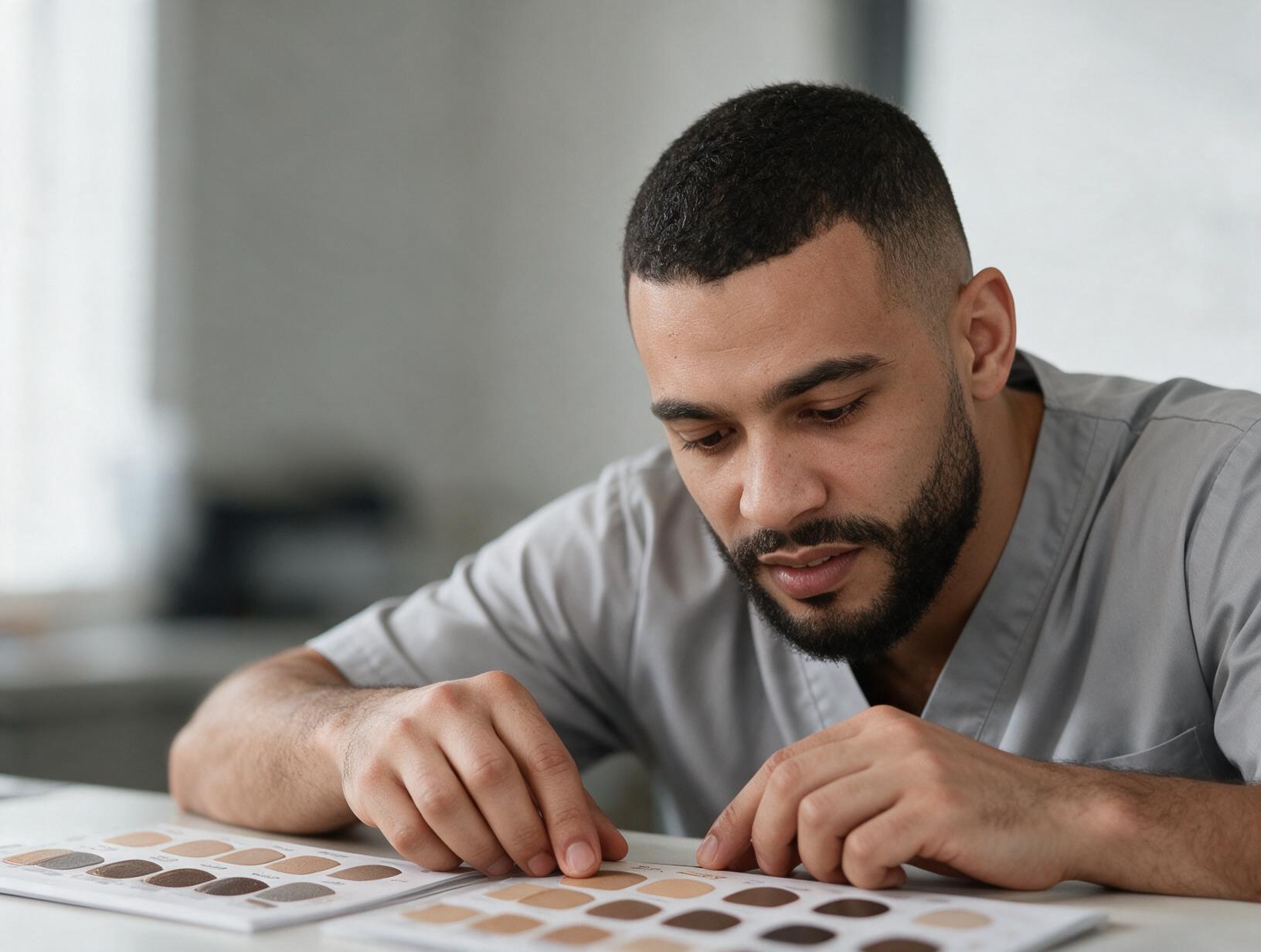
This is why my scalp micropigmentation treatment is planned around the individual rather than applied from a standard colour chart. Your existing hair, skin tone, pattern of loss and preferred grooming routine all matter.
Will the result look natural with white hair?
It can, provided the shade, dot size, spacing and hairline are handled carefully. White hair often looks most natural with a softer finish and a conservative hairline. A very dark pigment or a heavy, sharply drawn edge can create too much contrast and make the treatment more noticeable.
I pay particular attention to hairline work. A hairline should relate to your facial structure, age and the amount of hair behind it. For someone with a fully bald scalp, I would rather create a gently broken, natural-looking transition than an artificially straight edge. For someone with remaining hair, the design must blend with the areas where natural follicles are still visible.
Realistic expectations are important. SMP will not make a scalp look like it is covered by a thick, fully grown head of hair. Some scalp showing through is normal. With grey or white hair, that visual openness can be part of what makes the result convincing.
Should I keep my grey hair long or shave it?
That depends on the pattern and extent of your hair loss. If you have diffuse thinning and enough hair to create coverage, SMP can be placed between existing hairs to reduce scalp show-through. This is sometimes called a density approach. Your chosen haircut still needs to allow the pigmented areas to blend with the natural hair.
If you have more advanced loss, a closely clipped or shaved style may be easier to keep consistent. Short grey stubble can soften the difference between the pigmented scalp and natural hair. Keeping the sides and remaining hair at a similar length usually helps the overall finish look intentional.
Your grooming routine is part of the consultation. I will discuss whether you prefer a fine stubble length, regular clipping or a fully shaved look before agreeing the design. A finish that looks good on the day but does not suit how you normally maintain your hair is not a sensible plan.
What happens during a consultation and treatment?
At a free consultation, I assess your hair loss pattern, skin and remaining hair. We discuss the look you want, the hairline, the likely scalp finish and how grey or white hair affects the colour choice. I also ask about allergies, medical history and any scalp conditions. Active eczema, psoriasis or scalp irritation should be addressed before treatment, and anyone prone to keloid scarring should seek appropriate professional advice before considering tattooing.
Before a session, wash your hair and scalp as advised, arrive with clean skin and avoid products on the treatment area. I mark the proposed areas and agree the hairline with you before pigment is applied. A numbing medicine can be used to improve comfort. The process uses many small pigment impressions, with the shade and density built gradually rather than forcing a heavy result in one pass.
A full course commonly involves more than one session, with healing time between appointments. The exact number and session length vary according to the area, the amount of existing hair and the result we are trying to create. I may start lightly so I can see how the pigment settles before adding further detail.
How should I care for grey hair after SMP?
Aftercare is general good-practice information, not medical advice. For the first four days, avoid washing or wetting the treated scalp, shaving it, heavy exercise and activities that cause sweating. Avoid hot showers, steam rooms and direct sun during this early period. After the first few days, gentle washing can resume according to the instructions I give you.
Colour can look stronger at first and then soften as the scalp settles. Lightening during healing is normal, so do not judge the final result immediately. Avoid picking at any flaking or scabbing. Once the area has settled, moisturising can support the skin, and long-term broad-spectrum SPF helps limit fading caused by ultraviolet exposure.
After the final treatment, avoid swimming pools, saunas and steam rooms for as long as I advise. Contact me if you have a concern outside what we discussed. If you develop fever, pus or drainage, severe pain, marked redness or significant swelling, contact a healthcare provider promptly.
How do I choose an SMP practitioner for grey hair?
Look specifically at healed examples, not only fresh photographs. Ask to see work on clients with a similar hair colour, skin tone, hair loss pattern and preferred haircut. Hairline work deserves particular attention because an unnatural edge can undermine an otherwise subtle treatment.
Before booking, check that the practitioner has SMP-specific training and appropriate licensing. A clean studio, packaged needles opened in front of you, gloves, barrier protection and clear hygiene procedures are also important. Tell the practitioner about allergies and relevant scalp or medical conditions, and ask how they approach a patch test.
I am Shane Anderson, lead artist at Scalp Revive. My background includes barbering and hairline work, alongside training in permanent SMP and tricopigmentation. If you would like to discuss how your grey or white hair may work with a subtle scalp finish, you can book a free consultation.
Frequently asked questions
Can SMP make white hair look grey?
SMP does not recolour the hair itself. It places pigment on the scalp to create a softer shadow beneath or between the hair. This can make white hair appear less stark against the scalp, but the result should be planned as camouflage, not as a method of changing your natural hair colour.
Will SMP show when my hair grows longer?
It may become less blended if natural hair grows significantly longer, particularly where the treatment was planned for a clipped or shaved style. I discuss your usual haircut before treatment so the pigment placement and density suit your grooming habits. Regular trimming may be needed to maintain the intended relationship between hair and scalp.
Can I have SMP if my hair is grey at the sides but darker on top?
Yes, mixed hair colour can be assessed during consultation. Pigment selection and density need to account for the transition between darker and grey areas, as well as the amount of scalp showing. A gradual, restrained approach is usually more appropriate than applying one strong shade uniformly across the whole scalp.
Does SMP work on a completely white scalp with no hair?
It can create the appearance of a soft shaved shadow, but the design must remain realistic. On a fully bald scalp, there is no natural hair behind the hairline to provide reference points, so facial structure, age and the softness of the edge become especially important. The finish should not resemble a painted cap.
Can grey hair continue changing after SMP?
Yes. Your natural hair can continue to become lighter, thinner or more variable in colour. SMP does not stop that process. A careful initial match and a flexible, understated finish can make future changes easier to accommodate. If your hair or grooming style changes substantially, a later review may be useful.
Is SMP permanent if the pigment eventually fades?
SMP is intended as a permanent cosmetic tattoo, although it softens and fades over time. Sun exposure, skin ageing, lifestyle and individual skin behaviour all influence longevity. Some pigment remains in the skin, and maintenance or softening appointments may eventually be considered. Removal is possible with laser treatment, but it should not be treated casually.