2026-10-07
Which scalp finish suits you: lasting or temporary?
The main difference is longevity. SMP uses permanent cosmetic pigment designed to remain in the scalp and fade gradually, while tricopigmentation is a semi-permanent option intended to fade naturally, usually over many months, depending on the individual. Both can create the appearance of fuller hair or a closely shaved head, so your future plans matter.
What is the difference between SMP and tricopigmentation?
I explain the distinction in simple terms: both treatments use tiny pigment deposits to reduce the contrast between the scalp and surrounding hair, but they are designed to behave differently over time.
Scalp micropigmentation, often called SMP or a hair tattoo, is intended as a permanent cosmetic tattoo treatment. The pigment is placed in the upper layers of the scalp to create carefully spaced follicle-like points. It can give the appearance of a freshly shaved head, a more defined hairline or greater density between existing hairs. It does not grow hair or change the way your follicles work.
Tricopigmentation, sometimes called TMP, is the semi-permanent alternative. I use specialist pigment and an approach intended to allow the result to fade naturally. How long it remains visible varies with skin, lifestyle, sun exposure and the starting result, and I assess this at consultation.
In practical terms, the visual finish can be very similar. The important difference is how long you want to live with that decision before refreshing or changing it.
How does a hair tattoo look with each option?
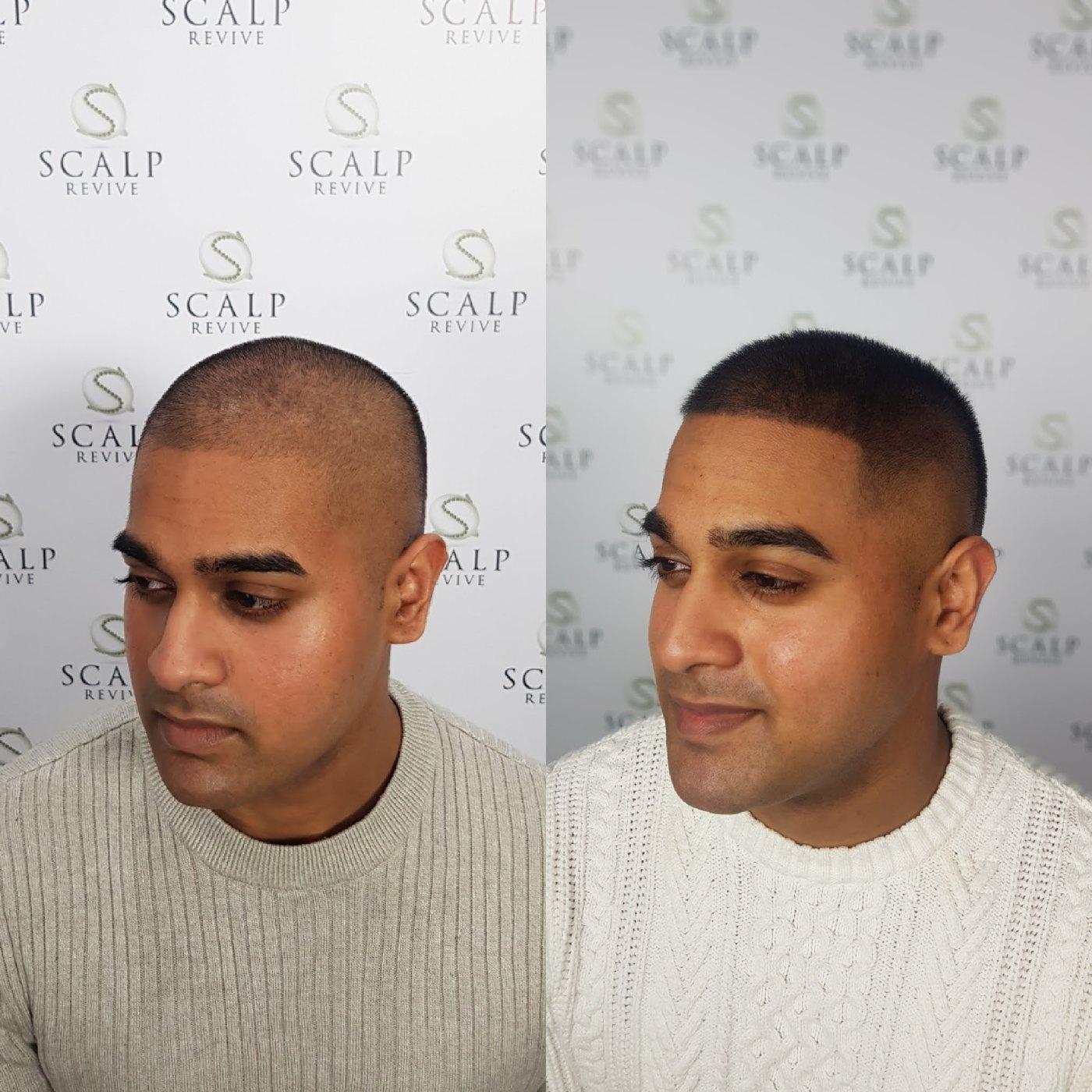
A well-planned hair tattoo should look like natural follicle shadow, not a painted scalp. I assess your hair colour, skin tone, existing hair, hair loss pattern and preferred grooming style before deciding how to build the result. A soft hairline is usually the most discreet choice. Some clients with darker skin tones prefer a sharper edge-up that resembles a fresh barber finish.
With a fully shaved or closely cropped style, the pigment creates the impression of stubble. If you keep hair between treatments, SMP or tricopigmentation can also be placed between existing hairs to reduce visible scalp show-through. The aim is not to cover every millimetre with solid colour. Some scalp showing through is normal and helps the result look believable.
Neither treatment should be used to promise hair regrowth. If you have an active or unexplained hair-loss problem, that should be assessed separately. In particular, suspected female pattern hair loss can have several possible causes, so medical investigations may be appropriate before cosmetic camouflage is considered.

Is SMP or TMP better for me?
There is no universal winner. Here are the questions I usually go through with clients:
- Do you want a long-term decision? SMP may suit you if you are comfortable with a permanent cosmetic treatment that gradually fades and may need a top-up later.
- Would you like to trial the appearance first? Tricopigmentation may be useful if you are uncertain about a new hairline, a shaved look or added visual density.
- Are your plans likely to change? A temporary result can offer flexibility, particularly if your hair loss is still evolving or you are considering different styles.
- How do you feel about maintenance? Tricopigmentation generally needs more regular refreshing. With SMP, maintenance is less frequent, but any future change or removal needs more careful planning.
Tricopigmentation is not a lesser version of SMP. It is a different commitment. Likewise, permanent does not mean the result will look identical forever. Pigment gradually softens and fades through skin renewal, sun exposure and individual biological factors.
I offer both SMP and tricopigmentation, the hair tattoo options, at Scalp Revive in Alwoodley, Leeds. You can read more about my scalp micropigmentation treatment and compare it with the separate tricopigmentation treatment before deciding.
What happens during treatment and healing?
Before either treatment, I assess the scalp, discuss the intended hairline or density, match the pigment and mark the treatment area for agreement. I also explain realistic expectations and ask about allergies, skin conditions, medication and any previous scalp procedures. A qualified provider should follow appropriate hygiene and licensing requirements, and protect both client and practitioner with suitable barriers.
The treatment is normally built gradually rather than saturated in one pass. The number of sessions varies and is assessed at consultation. Building the result gradually allows the scalp to settle and lets me assess how the pigment has healed before adding detail.
For general aftercare information, keep the scalp dry and avoid shampoo, shaving, sweating, heavy exercise, hot showers, steam rooms and direct sun during the early period advised by your practitioner. After the initial days, gentle washing can resume as directed. Avoid swimming pools for the longer healing period and use scalp SPF once normal care has resumed. Do not pick at flaking or scabs, and remember that early colour lightening is normal.
How do I choose a safe, natural-looking result?
Start by looking at healed work, not only fresh photographs. Pay particular attention to hairline transitions, dot size, spacing, colour and how the treatment blends into existing hair. Hairline work deserves special scrutiny because an overly straight or heavy edge is one of the quickest ways for a scalp treatment to look unnatural.
Ask who will treat you, what training they have in both SMP and tricopigmentation, what pigments they use and how they manage hygiene. You should have a proper consultation covering your skin, lifestyle, medical history and expectations. People prone to keloid scarring, or with active eczema, psoriasis or scalp inflammation, may need specialist advice before proceeding.
It is also worth remembering that permanent SMP can be removed later with laser treatment, but removal is a separate process and may be more complicated when pigment was placed incorrectly or has blurred. That is why the original practitioner’s judgement matters, even if you are initially considering the temporary option.
I keep the consultation free, and I use it to help you decide whether SMP, tricopigmentation or neither is appropriate for your circumstances. If you would like to talk through your options, you can book a free consultation without pressure.
Frequently asked questions
Can tricopigmentation be made permanent later?
It is possible to discuss moving from tricopigmentation to permanent SMP, but I would not treat it as an automatic next step. The scalp must first be assessed after the temporary pigment has faded, because the remaining colour, skin response and hair-loss pattern affect how a permanent result should be designed.
Will either treatment damage my existing hair follicles?
SMP and tricopigmentation are cosmetic camouflage treatments, not hair-growth procedures. When performed correctly, they are intended to create a visual effect on the scalp rather than alter natural hair growth. A consultation should still cover your scalp condition and any active inflammation before treatment is considered.
Can I keep my hair longer after a hair tattoo?
Yes, depending on your hair loss pattern and the result you want. Pigment can be placed between existing hairs to reduce scalp show-through, but it will not create real volume. I discuss suitable grooming length during consultation so the natural hair and pigmentation blend rather than compete.
What if my hair loss continues after treatment?
Hair loss can change the balance of a hairline or density treatment over time. That does not necessarily make the original work unsuitable, but it may mean a future adjustment is needed. I assess the likely pattern, your current hair and your preferred grooming style before planning the initial design.
Can SMP look natural on darker skin tones?
No. Skin tone is one of the factors I consider when choosing pigment, dot spacing and hairline style. A natural result depends on contrast, colour selection, placement and healed work, not on skin tone alone. Reviewing examples on varied skin tones is sensible before choosing a practitioner.